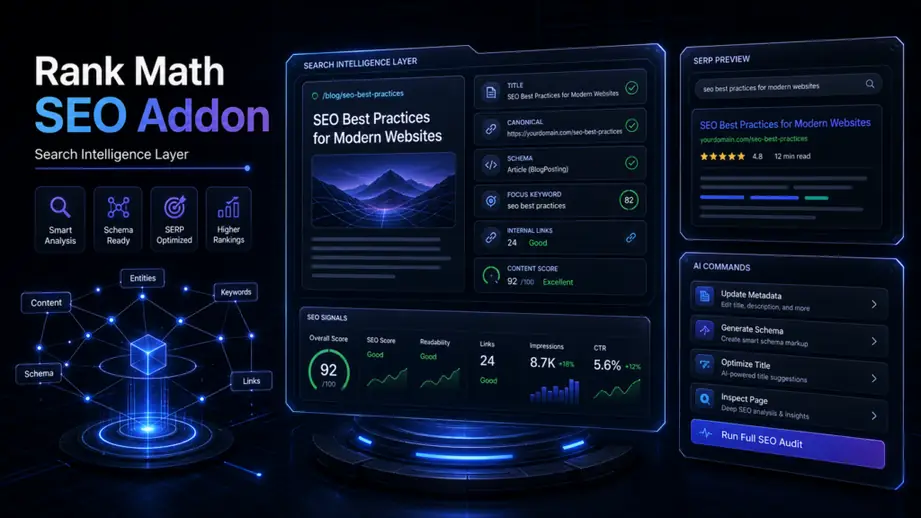
A good SEO workflow should make WordPress publishing more deliberate, not slower. When an AI agent can help draft, review, and prepare a post, Rank Math becomes the place where the final search signal is translated into practical fields: focus keyword, title, description, and checks before the post goes live.
This guide explains a practical Rank Math SEO workflow for WordPress MCP publishing. It is written for agencies, freelancers, and site operators who want AI assistance without handing publishing decisions to automation blindly.
What this workflow does
A WordPress MCP workflow connects an AI assistant to WordPress actions through controlled tools. Rank Math adds the SEO layer: the assistant can prepare metadata, check whether the content matches search intent, and surface review items before publication.
The goal is not to let software chase a score. The goal is to make every post leave the editor with a clear topic, a clean slug, a useful meta description, relevant images, and a review trail.
For WEBOMCP users, this workflow fits naturally beside the WEBOMCP addons page because SEO work is usually part of a larger publishing stack: content creation, media handling, approvals, and post-publish verification.
Before you start
Prepare the workflow before asking an AI assistant to touch production content. The reliable setup is simple:
- WordPress access for an account that can edit posts and media.
- Rank Math installed and configured for the site.
- A clear content brief with audience, search intent, and primary keyword.
- A publishing rule for whether the assistant can publish directly or must leave drafts for review.
- A short verification checklist for metadata, images, links, and status.
If the site uses automation across multiple roles, pair this with a review gate. The recent WEBOMCP article on human-in-the-loop WordPress MCP approvals explains why approval checkpoints matter when an AI tool can make visible site changes.
The Rank Math SEO workflow for WordPress MCP
The strongest workflow follows the same order a careful editor would use. It starts with intent, then moves through content, metadata, media, and final checks.
1. Start with search intent and the slug
Before the article is drafted, define what the searcher is trying to do. Are they learning a concept, solving a setup issue, comparing workflow options, or deciding whether an automation tool is safe enough for their team?
From there, choose a slug that reflects the topic without becoming a sentence. A slug-first process reduces duplicate posts and makes the final URL easier to review. If this is a recurring publishing workflow, the article on slug-first WordPress publishing is a useful companion.
2. Build the content brief before drafting
The AI assistant should know the primary keyword, secondary topics, audience, funnel stage, internal links, and the CTA target before it writes. This prevents the article from drifting into generic WordPress advice.
A practical brief for a Rank Math-driven post might include:
- Primary keyword and one search intent sentence.
- Three to five related entities or workflow topics.
- Internal pages that are verified to exist.
- Required images and alt text expectations.
- Publishing status rules, such as draft-only or publish after verification.
3. Draft for usefulness, then optimize metadata
Rank Math fields work best after the body has a clear angle. Write the post first, then create the SEO title and description from the actual promise of the article.
A clean metadata pass should answer four questions:
- Does the SEO title include the primary topic in natural language?
- Does the meta description describe the page accurately in one short pitch?
- Is the focus keyword aligned with the article, not just with a broad traffic term?
- Do secondary keywords reflect real subtopics covered in the body?
For example, an article about an agency workflow should not target a vague keyword like “SEO tool” if the page actually teaches WordPress publishing QA. The keyword should follow the content, not bully it.
4. Add images that explain the workflow
Images should help the reader understand the process. For technical SEO posts, that usually means a workflow diagram, checklist visual, UI screenshot, or simple architecture graphic. A random dashboard photo does not make the article more helpful.
Each image needs meaningful alt text. If the assistant uploads or selects media, it should verify that the media library alt text and the inline image alt attribute are not empty.
5. Add a human approval step before publishing
Automation is strongest when it handles repetitive preparation and leaves judgment to the right person. A reviewer should scan the post title, slug, metadata, internal links, featured image, and CTA before status changes to publish.
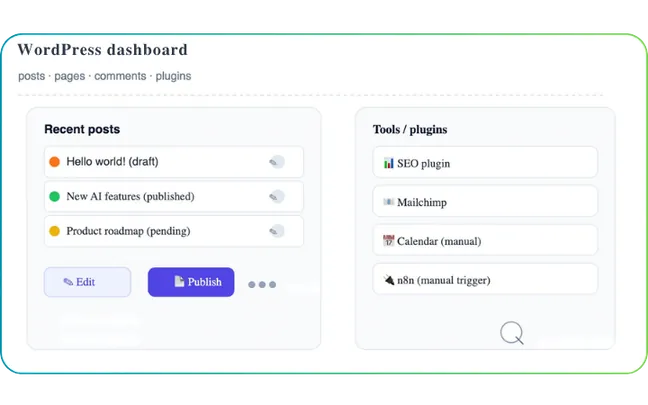
This is especially important for posts that mention security, pricing, product capabilities, or workflow promises. If the assistant cannot verify a claim, the claim should be removed or rewritten as a limitation.
6. Verify after the post is live
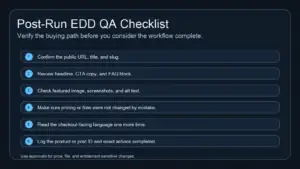
The final check should happen after publishing, not only inside the editor. Confirm that the public URL loads, the status is publish, the title is correct, the featured image appears, inline images have alt text, and the Rank Math fields are saved where the site exposes them.
This final step also catches common WordPress issues: a duplicate slug, an empty image alt field, a missing CTA, or a post that saved as draft because a REST request failed.
Example workflow for an agency team
Here is a realistic agency workflow for weekly SEO publishing:
- The strategist chooses one topic and approves the target slug.
- The AI assistant checks existing posts and drafts for duplicates.
- The assistant writes the article in clean Gutenberg-compatible HTML.
- The assistant selects existing media or creates relevant support visuals.
- Rank Math title, description, and focus keywords are prepared from the final body.
- A reviewer checks claims, links, images, and CTA quality.
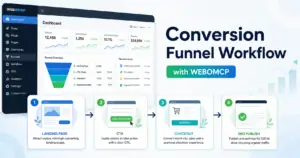
- The assistant publishes and verifies the public URL.
This setup keeps the AI useful without making it the final authority. It also creates a repeatable publishing rhythm that can be audited later.
Common mistakes to avoid
The fastest way to weaken this workflow is to treat SEO fields as decoration. Rank Math cannot rescue a page that does not satisfy intent.
- Choosing the keyword too late: the article may wander before the metadata is written.
- Stuffing secondary keywords: related phrases should reflect real sections, not a list pasted into the content.
- Skipping duplicate checks: automation can create near-identical posts if slug rules are loose.
- Using empty alt text: image SEO and accessibility both suffer when media is treated as decoration.
- Publishing without review: AI can miss product nuance, stale links, or unsupported claims.
Where WEBOMCP fits
WEBOMCP is useful when WordPress work needs to move from manual dashboard clicking into a controlled workflow. An AI assistant can help prepare posts, inspect site data, update media, and coordinate SEO fields when the site exposes the right tools and permissions.
That does not remove the need for access control. If an assistant can edit content or metadata, treat those permissions seriously. The WEBOMCP guide to WordPress MCP security best practices is the right next read before expanding automation across a production site.
Conclusion
A good Rank Math SEO workflow for WordPress MCP publishing is not about chasing a green score. It is about turning a repeatable editorial process into something safer, faster, and easier to verify.
Start with search intent, choose the slug early, draft for usefulness, prepare honest metadata, review the risky parts, and verify the published URL. If you are building that kind of workflow across a WordPress site, explore the WEBOMCP addon stack and decide which parts of publishing should be automated first.
FAQ
Can AI write Rank Math metadata automatically?
Yes, but the metadata should be generated from the final article and reviewed before publishing. The best descriptions are accurate, specific, and short.
Should every WordPress MCP workflow publish automatically?
No. Automatic publishing can work for low-risk sites with strong checks, but most teams should keep a human approval step for posts that affect brand, SEO, or conversions.
What should be verified after publishing?
Check the public URL, status, title, slug, featured image, inline image alt text, internal links, CTA, and Rank Math fields where the site exposes them.